Minority Leader Questions Government’s “Further Consultation” Claim Over Suspended 0.75% MoMo Charge
Credit: myjoyonline

The Minority in Parliament has raised concerns over the Bank of Ghana’s decision to suspend a proposed 0.75% charge fee on direct wallet-to-bank transfers, questioning the explanation that the move is intended for “further consultation.”
The levy, which was expected to take effect from 1st June, applied to wallet-to-bank transfers. However, the central bank has since announced a suspension of the policy following public criticism and stakeholder concerns.
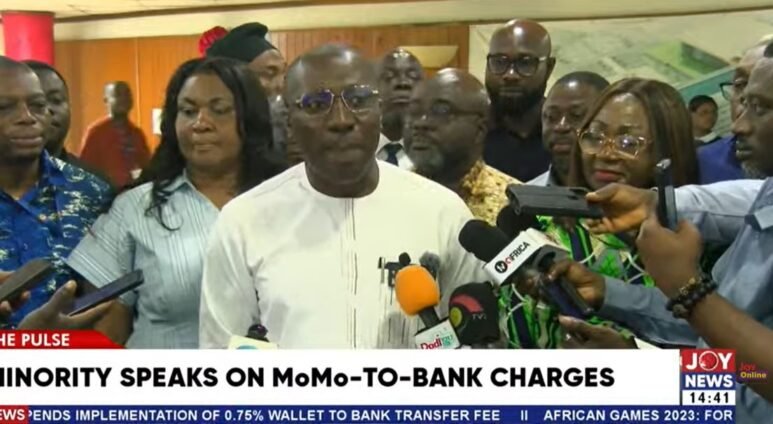
Addressing a press conference on Tuesday, May 26, the Minority Leader, Alexander Afenyo-Markin, questioned the basis of the suspension and the rationale behind the initial announcement of the charge.
He argued that the justification of “further consultation” was inconsistent with earlier assurances that major policy decisions would follow due process and broad stakeholder engagement before implementation.
“They [BoG] are now purporting to say that they have suspended the levy. Meanwhile, they earlier put out a public notice that from the 1st of June, transactions from bank accounts to the wallet would attract a 0.75% fee on direct wallet-to-bank transfers.
“According to them, they are doing this suspension for further consultation. The question is, for what further consultation in this context? Were these not the same people who went in the election, claimed that there must be constructive consultation before any policy is introduced and implemented? So what has changed? he asked.
According to him, such fiscal measures should ordinarily be subjected to full parliamentary scrutiny rather than being introduced and later suspended after public outcry.
Mr Afenyo-Markin also questioned the procedure through which the levy was being operationalised, insisting that Parliament must be fully engaged in decisions that have direct implications for financial transactions and citizens’ incomes.
He called on the Finance Minister to appear before Parliament to provide a full explanation on how the proposed charge was developed, communicated, and subsequently suspended.
“We are not interested in the suspension. We want to know how this was introduced and why Parliament was not fully engaged,” he said.