Fisheries Without Borders Empowers Stakeholders with Sustainable Fisheries Management Training
Credit: myjoyonline

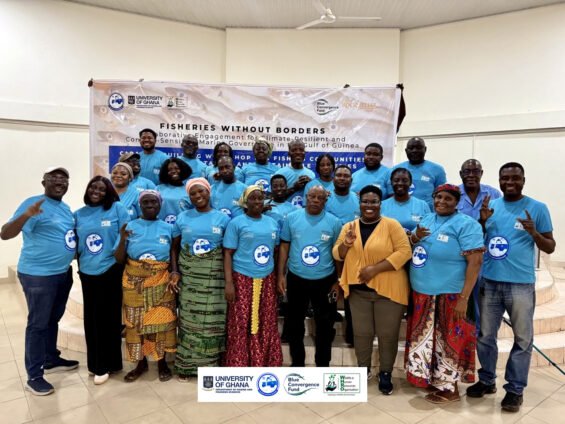
Fisheries Without Borders (FWB) has organised a capacity-building workshop for fishermen, fish processors, community leaders and marine scientists as part of efforts to strengthen sustainable fisheries management in the face of climate change.
The workshop, held at the Conference Hall of the National Fisheries Association of Ghana (NAFAG), formed part of a regional initiative involving Ghana, Nigeria and Benin aimed at addressing declining fish stocks in the Gulf of Guinea through collaborative fisheries management.
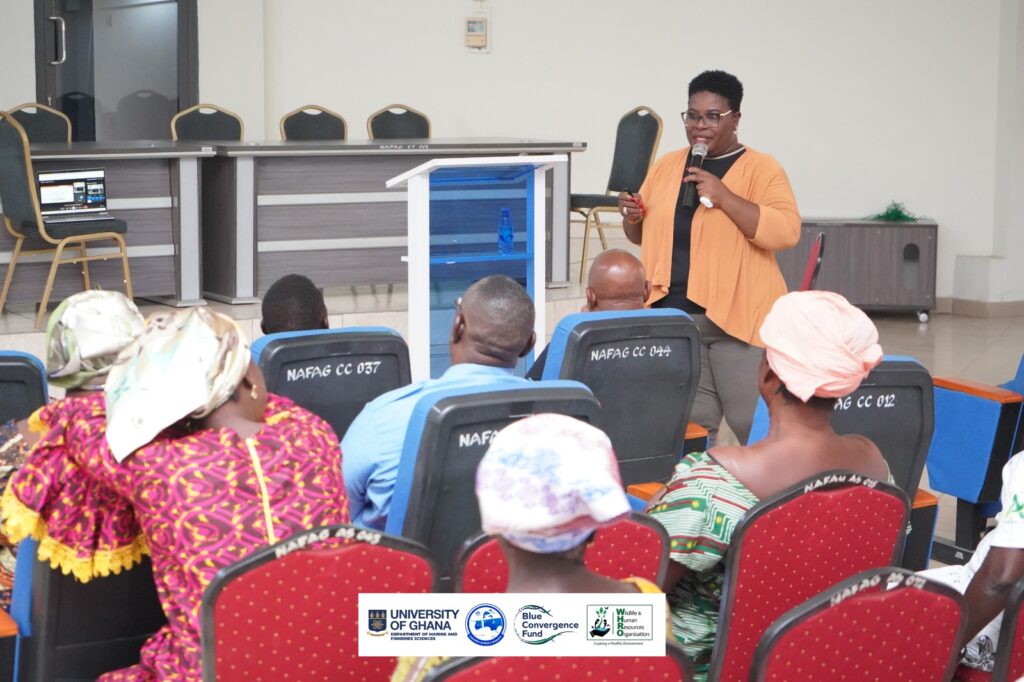
Participants from coastal fishing communities across Ghana took part in training sessions, group discussions and practical exercises on fisheries co-management, an approach that promotes collaboration between fishing communities and government in the management of marine resources.
Ghana’s fisheries sector continues to face significant pressure, with fish catches declining sharply over the past three decades. Marine landings have dropped from about 900,000 tonnes to approximately 400,000 tonnes, raising concerns about food security and livelihoods.
Fish remains Ghana’s most important source of animal protein, contributing about 60 per cent of protein intake in many households, while the fisheries value chain supports more than two million people involved in harvesting, processing and distribution.
However, stakeholders say many fishing communities remain excluded from key governance decisions that determine how marine resources are managed.
Ghana Country Lead for the Fisheries Without Borders project and faculty member at the University of Ghana’s Department of Marine and Fisheries Sciences, Professor F.K.E. Nunoo, said the situation requires a new approach that places communities at the centre of fisheries management.
He explained that introducing co-management systems alone would not guarantee improved food security, livelihoods or sustainability unless communities understand their roles in making such systems effective.
“We need communities to understand what makes it work, and what makes it fail,” he said.
One of the facilitators, Dr Angela Lamptey, Senior Lecturer at the University of Ghana and Chairperson of the Scientific and Technical Committee of the Fisheries Commission, took participants through areas including fisheries co-management, ethical principles, rights-based approaches, climate resilience and community governance.
Dr Lamptey stressed that fisheries regulations are more effective when fishers participate in developing them, adding that women and young people must also be represented in decision-making processes.
She noted that traditional knowledge from experienced fishers and community elders remains valuable and should complement scientific approaches in fisheries management.
According to her, co-management systems built on accountability, shared responsibility and community participation offer one of the most effective ways of addressing the over exploitation of shared marine resources.
The workshop also examined the impact of climate change on fisheries, with experts noting that the ocean has absorbed more than 90 per cent of excess heat generated by greenhouse gas emissions since industrialisation, creating significant consequences for marine ecosystems.
They explained that rising sea temperatures are forcing fish species to migrate farther offshore and into deeper waters, making it increasingly difficult for artisanal fishers to access them.
Participants also highlighted the impact of rising sea levels, coastal erosion, flooding of fishing settlements, unpredictable rainfall patterns and increasing toxic algae blooms on fishing communities.
Experts noted that for Ghana, with its 550-kilometre Atlantic coastline stretching from Ada to Half Assini, the impact of climate change on fisheries is already being experienced.
They stressed that addressing these challenges requires stronger cooperation among neighbouring countries because fish stocks are shared across borders.
Ghana, Nigeria and Benin together account for more than two-thirds of the Gulf of Guinea coastline, making regional collaboration essential for sustainable fisheries management.
“The sea does not ask which country you are from, so we must choose to act together,” one participant said.
Some participants also raised concerns about fishing bans being introduced without adequate explanation, especially for women fish processors who depend entirely on fish sales for their livelihoods.
They also expressed concern over weak enforcement of some fisheries regulations after restrictions are announced.
President of the National Fisheries Association of Ghana, Nana Jojo Solomon, encouraged participants to share the knowledge acquired with members of their respective fishing communities.
A member of the project’s collaborating partners team, Dr Andrews Agyekumhene, conducted baseline and endline surveys during the workshop to assess changes in participants’ knowledge and confidence.
Prof Nunoo said although one workshop cannot transform the entire fisheries sector, it can help lay the foundation for the reforms needed to protect Ghana’s marine resources.
The Fisheries Without Borders project is funded by Rockefeller Philanthropy Advisors through the Blue Convergence Fund and runs until 2027, with similar training programmes taking place in Nigeria and Benin.
Organisers say findings from the three countries will contribute to a regional synthesis report and cross-border policy brief to support improved fisheries governance.
Ghana’s Department of Marine and Fisheries Sciences at the University of Ghana serves as the national lead for the project, with the Wildlife and Human Resource Organisation (WHRO Ghana) supporting community engagement and coordination.