
GoldBod to Launch Gold Traceability System by End of 2026 to Track Gold to Mine of Origin – Sammy Gyamfi
Credit: myjoyonline

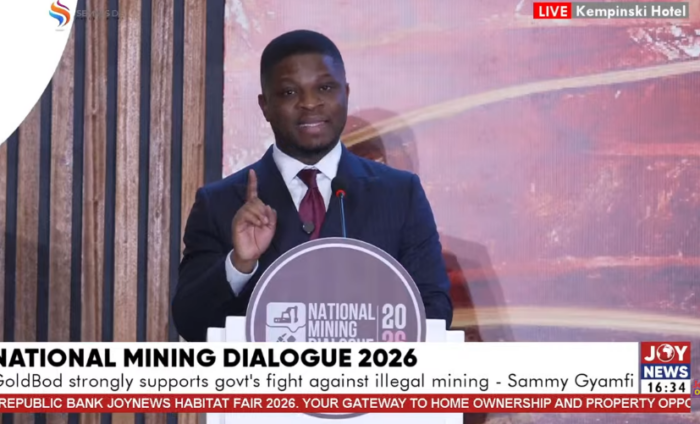
The Ghana Gold Board (GoldBod) is set to introduce a technology-driven gold traceability system by the end of 2026 to strengthen transparency, accountability and responsible sourcing across Ghana’s gold sector.
Chief Executive Officer of GoldBod, Sammy Gyamfi, announced the initiative as part of efforts to tackle illegal and irresponsible mining and ensure that gold purchased by the state can be traced to its exact mine of origin.
Mr Gyamfi disclosed this at a National Mining Dialogue organised under the theme, “Rethinking the Social License to Operate.” He said a national competitive procurement process is currently underway to develop and implement the new traceability system.
According to him, the system will enable GoldBod to track every ounce of gold purchased by the state back to the mine where it was produced.
“Every ounce of gold purchased by the Gold Board will be traceable to its mine of origin,” Mr Gyamfi said.
He explained that the initiative will strengthen responsible sourcing and improve accountability across the gold supply chain by enabling the state to determine whether gold entering its purchasing chain comes from a compliant and responsible mining operation.
Under the proposed system, gold identified as originating from mines operating irresponsibly could face sanctions, including confiscation or the application of a punitive discount when purchased by GoldBod.
“If it is not a responsible mine, the state can either confiscate it or buy it at a punitive discount as a disincentive for illegal mining,” he explained.
Mr Gyamfi said the measure is expected to make illegal mining less attractive by ensuring that gold produced through environmentally destructive or non-compliant operations does not receive the same commercial treatment as responsibly produced gold.
The traceability system forms part of GoldBod’s broader efforts to promote responsible mining, environmental protection and greater transparency in Ghana’s gold trade.
The system is also expected to strengthen oversight of the gold supply chain by providing greater visibility into where gold is produced, purchased and traded.
Mr Gyamfi noted that the initiative is particularly important as Ghana intensifies efforts to formalise the artisanal and small-scale mining (ASM) sector and transition more operators into legal and responsible mining.
The National Mining Dialogue was organised by Asempa 94.7 FM and its flagship programme, Ekosiisen, in partnership with Semmis DS and the Ministry of Lands and Natural Resources.
GoldBod also plans to commence an ASM Formalisation and Finance Support Programme in January 2027, aimed at supporting artisanal and small-scale miners to become compliant with regulatory requirements and international responsible-sourcing standards.
The planned traceability system is therefore expected to provide a critical mechanism for distinguishing responsibly produced gold from gold linked to illegal or environmentally harmful mining activities.
Mr Gyamfi said the ultimate objective is to ensure that Ghana derives greater economic value from its gold resources while protecting the environment, promoting responsible mining and strengthening accountability throughout the industry.