

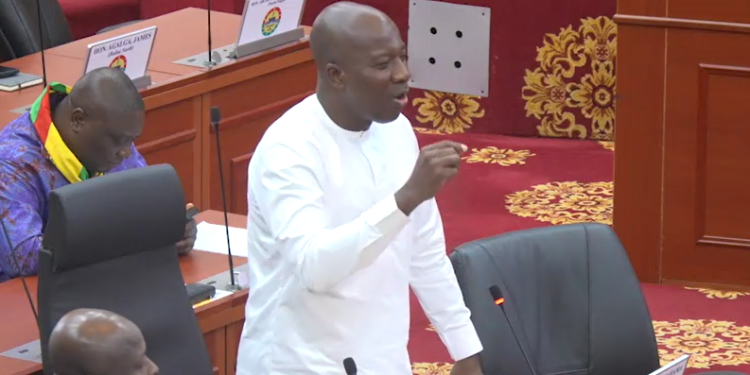
The Majority Leader in Parliament, Mahama Ayariga, has cautioned Members of Parliament against using the legislative chamber or other public platforms to attack, undermine or intimidate law enforcement agencies in the discharge of their duties.
According to him, law enforcement institutions must be allowed to enforce the laws of the country without political interference, regardless of the political affiliation, position or social status of persons being investigated or prosecuted.
Speaking on the floor of Parliament, Mr Ayariga rejected suggestions that the government was targeting political opponents or infringing on the constitutional right to freedom of expression.
He maintained that while citizens, including politicians, have the right to express their views freely, such rights should not be used as a basis to obstruct law enforcement agencies from acting against alleged criminal conduct.
“I don’t believe that there’s any political party targeting anybody freely expressing themselves either in this chamber or outside this chamber. At the same time, I also don’t believe that anybody should try to use this chamber or any platform to intimidate the law enforcement agencies when they are clamping down on criminal conduct, be the conduct of politicians, of ordinary armed robbers or of any other citizen.”
Mr Ayariga stressed that the application of the law should not depend on the identity, political affiliation or influence of an individual.
He argued that Parliament, as the institution responsible for making laws, should not become a platform for undermining the very agencies mandated to enforce those laws.
“Crime is crime. We believe that we pass laws in this House so that they will be enforced outside there. When the law enforcement agencies are enforcing those laws, we should not come and stand in this chamber and bastardise them and try to intimidate them and try to give their conduct political coloration. It does not help.”
The Majority Leader’s comments come amid heightened political debate over the activities of law enforcement agencies and allegations of selective targeting and political interference.
He urged lawmakers to allow the relevant institutions to carry out their responsibilities and, where necessary, challenge their actions through the appropriate legal and institutional channels rather than resorting to political pressure.
Mr Ayariga further emphasised the importance of protecting the independence and credibility of law enforcement institutions, warning that attempts to politicise criminal investigations could weaken public confidence in the country’s justice system.
He maintained that Parliament’s role should be to uphold the rule of law and ensure accountability while allowing law enforcement agencies to perform their statutory duties without intimidation or undue political influence.