Cycling to Work: EPA Deputy CEO’s Commute Raises Safety and Environmental Concerns
Credit: Mahmud Mohammed-Nurudeen

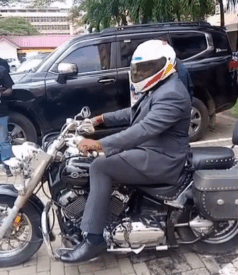
The Deputy Chief Executive Officer of the Environmental Protection Authority (EPA), Dr. Jacob Paarechuga Anankware, surprised many people when he arrived at work riding a motorcycle.
Dressed in a formal suit and a certified helmet, Dr. Anankware carefully rode into the EPA premises. Staff and visitors quickly noticed his arrival, and conversations followed about leadership, simplicity, and safety on the roads.
Many described the moment as unusual for a senior public official, but also refreshing. Others praised him for wearing full protective gear and setting a good example for riders.
Speaking on the reason behind his motorcycle ride, Dr. Anankware explained that it was not a special or symbolic action.
“Periodically, I ride to work,” he said. “Riding makes me feel alert and improves my concentration. It also helps me appreciate other road users who are not in my position. Finally, it helps me get to work early, and I am able to move quietly without attention.”
He confirmed that the ride was not a one-time decision, adding that riding to work is part of his normal routine. “There was nothing special about today. It is one of my routines,” he said.
Although Dr. Anankware said he was not trying to promote a policy message, he noted that motorcycles generally use less fuel and can help reduce carbon emissions compared to bigger vehicles.
“Bikes use less fuel, and this has a catalytic effect on the carbon footprint left by big vehicles,” he explained, while stressing that he does not expect all government officials to ride motorcycles because of safety concerns and personal choice.
When asked if motorcycle use can help reduce carbon dioxide emissions in cities, his answer was, “definitely.”
He said the EPA is already leading efforts to promote green energy and cleaner alternatives. “We promote alternatives to fossil fuels because of their effects on the ozone layer, global warming, oceans, plants, animals, and even human survival on planet Earth,” he said.
Dr. Anankware explained that Ghana’s long-term plan is to achieve net-zero energy-related emissions by 2060, as outlined in the Ghana Energy and Investment Plan (2023–2060).
He added that in 2024, the government waived import duties on electric vehicles meant for commercial transport until 2032. According to him, John Dramani Mahama has also shown leadership by driving an electric car, a move he says has helped increase the number of electric vehicles in the country.
Dr. Anankware said road safety was one of the reasons he rode with a helmet. “Wearing a helmet is a basic requirement. It protects the rider from head injury in case of an accident,” he said.
He called for strict enforcement of helmet laws and sent a message to commercial motorbike riders, commonly known as Okada riders.
“My humble plea to all riders is to wear a helmet at all times, even for short distances. You never know when an accident will happen. The brain is the most important part of the body. Any injury to it can kill or permanently damage you.”
Dr. Anankware believes public officials should live in ways that match national goals. “Public officials should demonstrate simple and responsible living,” he said, praising President Mahama’s modest lifestyle and leadership style.
He also highlighted serious air pollution concerns, citing data from the World Health Organization (WHO), which shows that Accra is one of Africa’s fastest-growing cities, with road transport contributing a large share of fine air pollution.
“These statistics are worrying. It will take collective effort,” he said, calling on all Ghanaians to support efforts to protect the environment and reset the economy.