

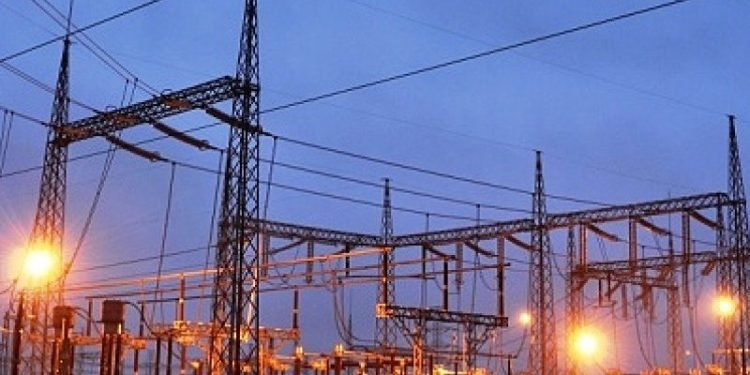
Rising electricity demand, lagging infrastructure
Analysis of data from the Energy Commission, and the Finance Ministry of Ghana by the Institute for Energy Security (IES) reveal growing structural vulnerabilities within Ghana’s power transmission network and the immediate need for decisive investment to sustain system reliability.
The analysis show Ghana’s power system has experienced significant expansion, with system peak demand increasing from approximately 1,933 megawatts (MW) in 2015 to roughly 4,280 MW in 2025, reflecting strong and sustained growth of over 8 percent annually. Over the period, there was more than a two-fold increase in the system peak, highlighting that the growth reflects deeper economic and demographic drivers. 2018 (333 MW), 2024 (334 MW), and 2025 (328 MW) show the largest jump. Except for minor slowdowns, demand rises every year, indicating structural, not temporal growth.
While this trajectory signals economic progress, rising energy access, and consumption expansion, it has not been matched by commensurate investment in transmission infrastructure. As a result, the system is increasingly characterized by congested transmission corridors, rising technical losses, over-loaded infrastructure, and ageing, obsolete equipment; all of which collectively pose a direct threat to grid stability, system reliability, and the efficiency of power delivery. With demand now exceeding 4,280 MW, Ghana’s power system is now entering a higher-risk zone for supply shortfalls if capacity expansion and grid upgrades lag behind demand growth.
The system analysis indicates that without immediate intervention, the transmission network faces heightened risks, such as increased frequency of system disturbances, reduced ability to evacuate generated power efficiently, higher operational costs arising from system inefficiencies, and growing constraints on regional electricity trade opportunities.
The structural imbalance between demand growth and transmission capacity expansion has therefore reached a critical point requiring urgent policy and investment response. The graph above confirms a rapid expanding but increasingly stressed power system, where future reliability will depend on how quickly infrastructure keeps pace with demand.
To address these risks, the Institute highlights a set of strategic power transmission interventions essential for stabilizing and future-proofing the grid, including:
▪ Upgrading existing transmission infrastructure with high-capacity conductors will reduce system over-loading, minimize technical losses, and provide critical redundancy under contingency conditions, thereby improving overall network performance. At the same time, the development of additional high-voltage transmission circuits is necessary to significantly enhance bulk power transfer capacity across the grid, strengthen supply security to major load centres, and increase system flexibility, particularly during peak demand periods.
▪ Furthermore, reinforcing key transmission corridors will provide alternative power flow paths, reduce vulnerability to single-point failures, and enhance overall system resilience. Investments in reactive power compensation and system upgrades will improve voltage stability across the network, enhance power quality delivered to consumers, and support the integration of renewable energy (RE) sources, particularly in areas where variability poses operational challenges.
▪ In addition, the replacement of ageing and over-loaded transformers and sub-station equipment has become imperative to eliminate operational bottlenecks, ensure compliance with modern technical standards, and maintain system reliability. Expanding transformation capacity at critical nodes will not only meet growing electricity demand but also improve redundancy and ensure a more stable and reliable supply of power to end-users.
▪ Equally important is the need to optimize the network to reduce both technical and commercial losses, thereby improving transmission efficiency and enhancing the cost-effectiveness of power delivery across the system.
▪ Strengthening inter-connection capacity will also play a crucial role in increasing cross-border electricity trade, improving Ghana’s competitiveness within the regional power market, and supporting revenue generation through exports.
The Institute finds that the slow pace of transmission investment has largely been driven by persistent financing constraints, which continue to limit the ability of sector institutions to undertake large-scale infrastructure upgrades. Addressing this challenge requires the adoption of innovative financing mechanisms, including public-private partnerships (PPP), alongside strengthened regulatory frameworks that ensure cost recovery and long-term sustainability.
Improved coordination among sector agencies and the strategic prioritization of transmission investments within national energy planning frameworks are also critical to unlocking the required capital and ensuring timely project execution.
The Institute for Energy Security (IES) can conclude that the sustainability of Ghana’s power sector depends not only on generation capacity but, more importantly, on the strength and resilience of its transmission backbone. Without urgent and coordinated action, the current trajectory risks undermining energy security, industrial productivity, investor confidence, and Ghana’s leadership in regional power trade.
The Institute therefore urges government, regulators, and development partners to prioritize transmission network reinforcement as a matter of national strategic importance. The decisions taken today regarding transmission infrastructure investment will determine the reliability, efficiency, and competitiveness of the power sector for decades to come. Decisive action is not optional, it is imperative.
Institute for Energy Security