
Hidden Fathers: Why Ghana Should Mandate DNA Testing at Birth and Criminalise Paternity Fraud
Credit: myjoyonline

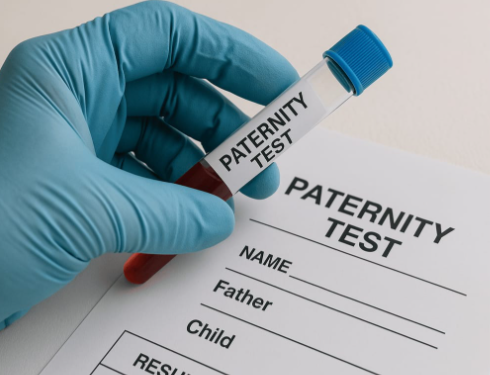
Paternity fraud is one of the pertinent social problems discussed in today’s Ghana. It may not be loud like political scandals or visible like economic hardship, yet its impact cuts deeply into the very core of family life, trust, identity, responsibility and truth.
Across homes, courtrooms and private conversations, many Ghanaian men are beginning to confront a devastating reality: children they have loved, nurtured and sacrificed for may not be biologically theirs. This is not merely a private matter between two individuals. It is a national issue that touches on justice, morality and the responsibility of the state to protect its citizens from deception.
In Ghanaian culture, fatherhood has always been more than biology. A man is expected to provide, to guide, to protect, and to carry the weight of his family with dignity. Traditionally, society placed greater emphasis on social fatherhood than biological certainty.
If a child was born within a marriage or accepted into a household, the man was expected to assume responsibility without question. This cultural norm helped maintain social cohesion, but it also created an environment where biological truth could easily be obscured. In the past, there was no accessible scientific means to verify paternity, so trust, whether justified or not, was the foundation upon which families were built.
Today, that reality has changed. Science has introduced certainty where once there was only an assumption. DNA testing has made it possible to establish with near absolute accuracy whether a man is the biological father of a child. As access to such testing increases in Ghana, an uncomfortable truth is emerging. Many men who seek these tests, often out of suspicion or curiosity, are discovering that they are not the fathers of the children they have been raising.
The emotional consequences are devastating. Imagine investing years of love, financial resources and personal sacrifice into raising a child only to discover that the foundation of that relationship was built on a lie. It is not just betrayal, it is a complete collapse of identity and purpose.
The financial implications are equally severe. Raising a child in Ghana today is not a small commitment. From school fees to healthcare, clothing, feeding and general upbringing, the cost is high. When a man unknowingly bears this responsibility for a child that is not his, he becomes a victim of sustained deception. This is not a simple misunderstanding; it is a long-term misrepresentation that results in measurable financial loss. In any other context, such conduct would clearly be classified as fraud. Yet in Ghana, paternity fraud exists in a legal grey area, often treated as a private or moral issue rather than a criminal one.
This must change. The deliberate misrepresentation of a child’s paternity should be recognised for what it is: a serious form of deception
with profound emotional and financial consequences.
Criminalising paternity fraud is not about punishing women indiscriminately; it is about establishing accountability where intentional deceit exists. The law already recognises and punishes various forms of fraud like financial fraud, identity fraud and false representation because they undermine trust and cause harm. Paternity fraud fits squarely within this framework. When a person knowingly misleads another into assuming lifelong responsibility under false pretences, the state has a duty to intervene.
Closely tied to this is the urgent need for mandatory paternity testing at birth in Ghana. This policy is often met with resistance, largely because it is misunderstood. Many people interpret it as a sign of distrust or an attack on relationships. In reality, it is neither. Mandatory testing would simply establish biological truth at the earliest possible stage, removing doubt, suspicion, and future conflict. It would function as a neutral medical procedure, much like recording a child’s weight or administering vaccines. By making it universal, it removes the stigma and personal tension associated with requesting a test. No man would need to “ask” for proof; it would already be provided as a standard part of childbirth procedures.
The benefits of such a policy are far-reaching. First, it protects men from unknowingly taking on responsibilities based on falsehood. Second, it safeguards the rights of children who deserve to know their true biological origins. Identity is not a trivial matter. It affects a person’s sense of self, medical history and even legal rights such as inheritance. Discovering later in life that one’s biological identity was hidden can lead to deep psychological distress. Mandatory testing ensures that every child begins life with clarity and truth.
Furthermore, it would significantly reduce disputes in Ghana’s legal system. Paternity issues often arise in cases involving child support, custody and inheritance. These disputes can be lengthy, emotionally charged and costly. Establishing paternity at birth eliminates ambiguity and provides a clear legal foundation for any future claims. It brings certainty to an area that is currently plagued by doubt.
There is also a broader societal benefit. Mandatory testing would promote a culture of honesty and accountability. When individuals know that paternity will be verified at birth, the incentive for deception is greatly reduced. It creates a system where truth is the default, not something that must be fought for or discovered after years of uncertainty.
The ongoing efforts by Ghanaian political figure Kwame Asare Obeng, popularly known as A-Plus, to push a bill in Parliament aimed at addressing paternity fraud reflect a growing recognition of this issue at the national level. His advocacy has sparked important conversations about the legal and moral implications of misattributed paternity. While the specifics of such legislation will require careful drafting, the principle behind it is sound. Ghana must begin to treat paternity fraud with the seriousness it deserves.
Opponents of mandatory testing and criminalisation often raise several concerns. One common argument is that such measures could destroy families by exposing uncomfortable truths. I say, this argument confuses cause and effect. It is not the discovery of the truth that destroys families; it is the deception that existed in the first place. Truth may be painful, but it is necessary. A family built on falsehood is already unstable, whether that instability is visible or not. Addressing the truth early prevents deeper harm later.
Another argument is that mandatory testing violates privacy. However, society already accepts various forms of mandatory health and legal procedures when they serve a greater good. Birth registration, vaccinations and medical screenings are all required because they protect individuals and society as a whole. Paternity testing in this context serves a similar purpose. It ensures legal clarity, protects against fraud and upholds the rights of all parties involved.
I have female friends who have argued that economic hardship or social pressure may drive women to misrepresent paternity. They suggest that criminalisation would be too harsh. While it is important to acknowledge and address the social challenges that individuals face, hardship cannot justify deception. If anything, these arguments highlight the need for stronger social support systems, not the acceptance of fraud. The law must be clear that intentional misrepresentation is unacceptable, regardless of the circumstances.
There is also the concern that such policies could create distrust between partners. In reality, the opposite is likely to occur. When paternity testing becomes a standard procedure, it removes suspicion from relationships. Trust is strengthened when there is transparency. Couples can focus on building their families without the shadow of doubt. It transforms what is currently a sensitive and often confrontational issue into a routine and accepted practice.
At its core, this issue is about fairness. It is about ensuring that no individual is deceived into making life-changing commitments under false pretences. It is about protecting children’s right to know their true identity. It is about holding individuals accountable for deliberate actions that cause harm. It is also about recognising that in a modern society, truth should not be optional.
Ghana stands at a crossroads. The tools to address paternity fraud already exist. DNA testing is accessible and reliable. Public awareness is growing. Legislative interest is emerging. What remains is the political will to act decisively. Making paternity testing mandatory at birth and criminalising intentional paternity fraud would send a clear message that truth matters, that deception has consequences and that the state is committed to protecting its citizens from harm.
Some men are committing suicide, Others suffer in private, carrying the weight of betrayal without recourse. Too many children grow up without knowing their true fathers. Too many families are built on foundations that are fragile and uncertain. Addressing paternity fraud is not about assigning blame; it is about establishing truth and justice.
In the end, a society that values honesty must be willing to confront uncomfortable realities. Ghana has the opportunity to lead by example, to implement policies that reflect both compassion and accountability.
Mandatory paternity testing and the criminalisation of paternity fraud are not extreme measures; they are necessary steps toward a more transparent, fair and just society.
Believe me to be
Opare Philip Israel