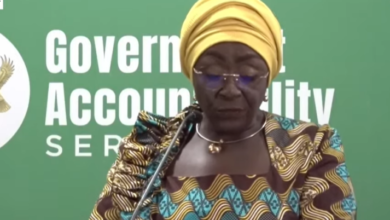

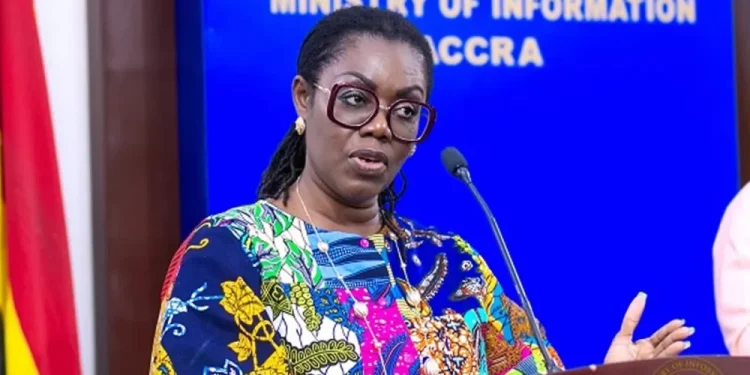
Former Minister for Communications and Digitalisation, Ursula Owusu-Ekuful, has cautioned against what she describes as false narratives and attempts to misrepresent her work during the 2022–2023 SIM card registration exercise.
In a detailed statement released on March 20, 2026, the former minister stressed that the SIM registration exercise, though not perfect, established a structured and legally compliant system, linking nearly 30 million SIM cards to Ghana Cards and strengthening the national identification framework.
She argued that the SIM card registration process during her time as minister represented real progress for Ghanaians, and should not be undermined by misleading claims or political narratives.
She also criticised the government for failing to acknowledge the practical gains the registration during her time brought to the system.
“This government should stop pretending that it is starting afresh or doing anything new. It should stop acting as though nothing meaningful was done before now. Governance is a continuum. If something has been started and useful progress has been made, the duty of the next government is to build on it, improve it, and be honest about it.
“You cannot lie about a process, dismiss it in public, and then turn around and do the same thing again. If the previous method was so wrong, why are you repeating the same methodology, the same structure, and the same approach? You cannot condemn a process in the morning, copy it in the afternoon, and come back in the evening to claim you have invented something new,” she wrote.
In her concluding remarks, she wrote in her native language Twi: “Wo nyi m’ayɛ a, mɛnsɛi me din!!” to wit “If you cannot praise me, do not tarnish my reputation.”