State of the Nation Must Reflect in People’s Lives, Not Just Statistics – Oppong Nkrumah
Credit: myjoyonline

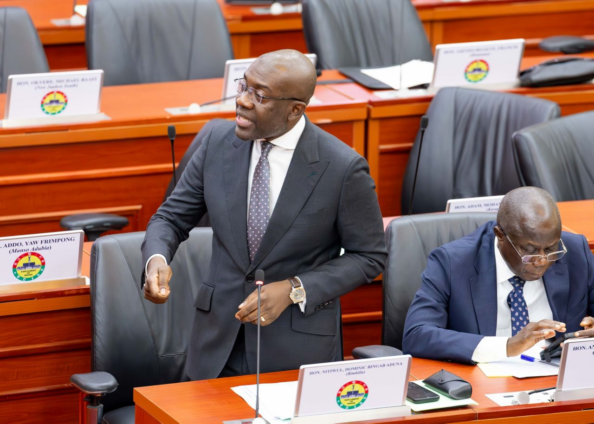
The Ofoase-Ayirebi MP, Kojo Oppong Nkrumah, has criticised the government’s portrayal of Ghana’s economic situation in the recent State of the Nation Address (SONA).
The former Housing Minister argued that the true condition of the country cannot be measured merely by official statistics but by the daily experiences of ordinary citizens.
Contributing to the debate on the address in Parliament, Mr Oppong Nkrumah said there was a “wide gap between the government’s narrative and the lived realities of millions of Ghanaians.”
According to him, members of the Minority had recently undertaken a tour of farming communities, agro-processing facilities and engagements with members of the middle class, which revealed a very different picture from the optimistic assessment presented by the government.
“Mr. Speaker, we on this side have just returned from a tour of farming communities, agro-processing sites and engagements with the middle class of this country,” he told the House.
“As we listen to you paint a very glossy picture of the state of the nation, we observe that there is a wide gap between your state of the nation and the lived experience of millions of our compatriots in this country.”
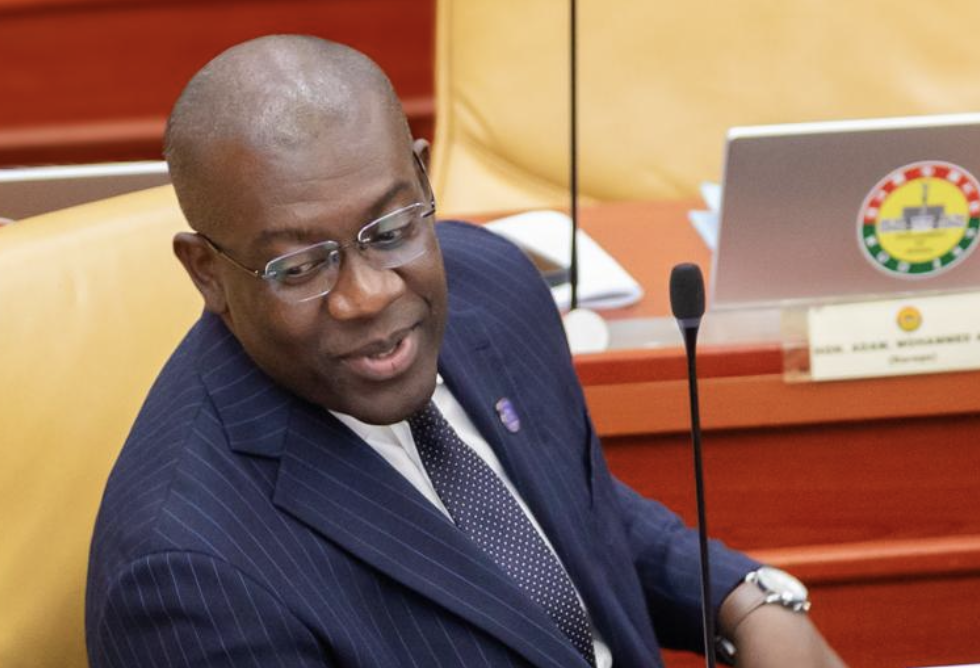
Mr Oppong Nkrumah argued that the divergence between official data and reality on the ground stems from what he described as the government’s reliance on statistics generated in Accra rather than direct engagement with communities across the country.
“This wide gap is because our friends who are in government are sitting here in Accra generating data, reading that data, believing that data, and then telling the people on the ground that that is the reality,” he said.
While expressing disappointment with the government’s position, he said the situation was not entirely surprising, recalling debates during the 2024 elections in which, according to him, the governing party had criticised economic challenges without presenting credible solutions.
“For a party that claims it supports the grassroots of this country, it is disappointing that within one year they have forgotten the realities on the ground and are sitting here quoting figures — 70%, 20%, 30%, 40% — as if those numbers alone define the state of the nation,” he remarked.
The former Minister for Information noted that the real state of the nation should be assessed through key sectors of the economy—agriculture, industry and services—rather than headline statistics.
“If you want to determine the true state of the nation, check the state of agriculture,” he said.
Drawing from the Minority’s recent tour, he reported that several categories of farmers across the country were struggling with low demand and limited liquidity.
“Talk to the rice farmers today,” he said. “Rice farmers have borrowed money, cultivated rice, milled the rice, and have thousands of bags stored up in barns, but cannot find buyers because there is very little liquidity in town.”
He added that maize farmers in northern Ghana were facing similar challenges.
According to him, many had borrowed funds to cultivate maize but were unable to sell their harvest due to weak demand.
“Maize farmers have cultivated maize, harvested it, and stored it in their barns because they cannot get buyers. There is very little liquidity in town,” he stressed.
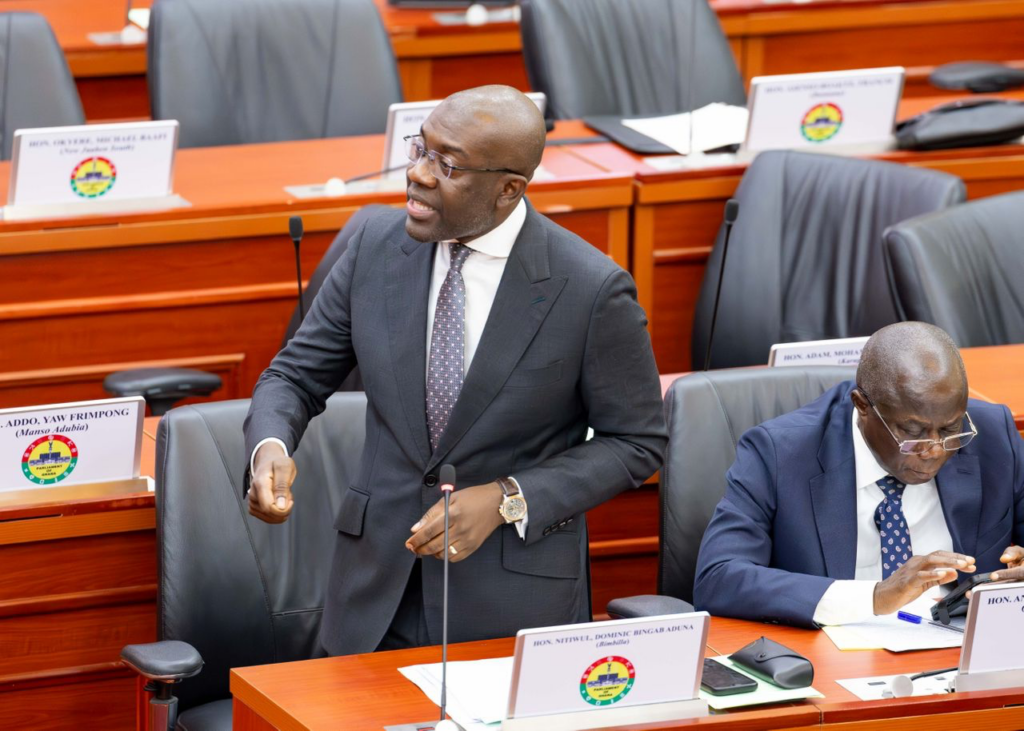
The situation, he continued, was also affecting cashew farmers in the Bono and Ahafo regions, where declining prices and limited market activity were placing farmers under financial pressure.
Mr Oppong Nkrumah also highlighted growing concerns in the cocoa sector, saying even purchasing clerks were losing money due to market uncertainties.
He warned that some cocoa farmers were contemplating abandoning their farms.
“Now we are finding people who have invested in cocoa farms who are saying that they are contemplating selling their farms to illegal miners because they think they will make more value from there,” he revealed.
According to him, a country where farmers are struggling cannot credibly claim that the overall state of the nation has improved.
“A nation in which the state of its farmers is getting worse cannot be a nation whose state has improved,” he declared.
Turning to the manufacturing sector, the Ofoase-Ayirebi legislator said many local manufacturers were facing higher operating costs than in the previous year.
He cited increases in utility tariffs, particularly electricity, which he said had risen by about 28%, significantly increasing production costs.
“The question to ask is whether the Ghanaian manufacturer today is better off than he was in 2024,” he said. “If you speak to them, they will tell you that utility bills have gone up and the cost of locally produced raw materials is becoming unbearable.”
If manufacturers are worse off than they were the previous year, he argued, the state of manufacturing—and by extension the nation—cannot be considered improved.
Mr Oppong Nkrumah further pointed to difficulties within the service sector, urging lawmakers to consult small business operators and artisans to understand the situation.
“Speak to the hairdressers, the welders, those who operate cold stores, and those doing computer coding,” he told Parliament.
“They will tell you they are worse off because the cost of electricity alone is putting many of them out of business.”
He maintained that the everyday experiences of citizens, rather than official statistics, should be the ultimate yardstick for evaluating national progress.
“You can stand here in the chamber and recite numbers that the state of the nation is better,” he said. “But the lived experience of the people on the ground is what matters.”
Mr. Oppong Nkrumah also questioned the government’s emphasis on declining inflation figures, suggesting that the statistical improvement did not necessarily reflect improvements in the cost of living.
He argued that the government’s heavy monetary sterilisation measures—estimated at about GH¢62 billion in 2025—could artificially reduce inflation without improving economic conditions for citizens.
“With the method you are using, inflation can even come down to zero,” he said. “But what the people are measuring out there is the cost of living.”
He added that limited liquidity in the economy meant that businesses were struggling to sell goods and services because there was insufficient money circulating to generate demand.
The Ofoase-Ayirebi MP also challenged claims that the government had created one million jobs within nine months, describing the figure as unrealistic.
“I am sure that even the Government Statistician himself does not believe that one million youth have found jobs in nine months,” he argued.
“If it is true, why are the young people in your constituencies chasing you? Where are the jobs?”
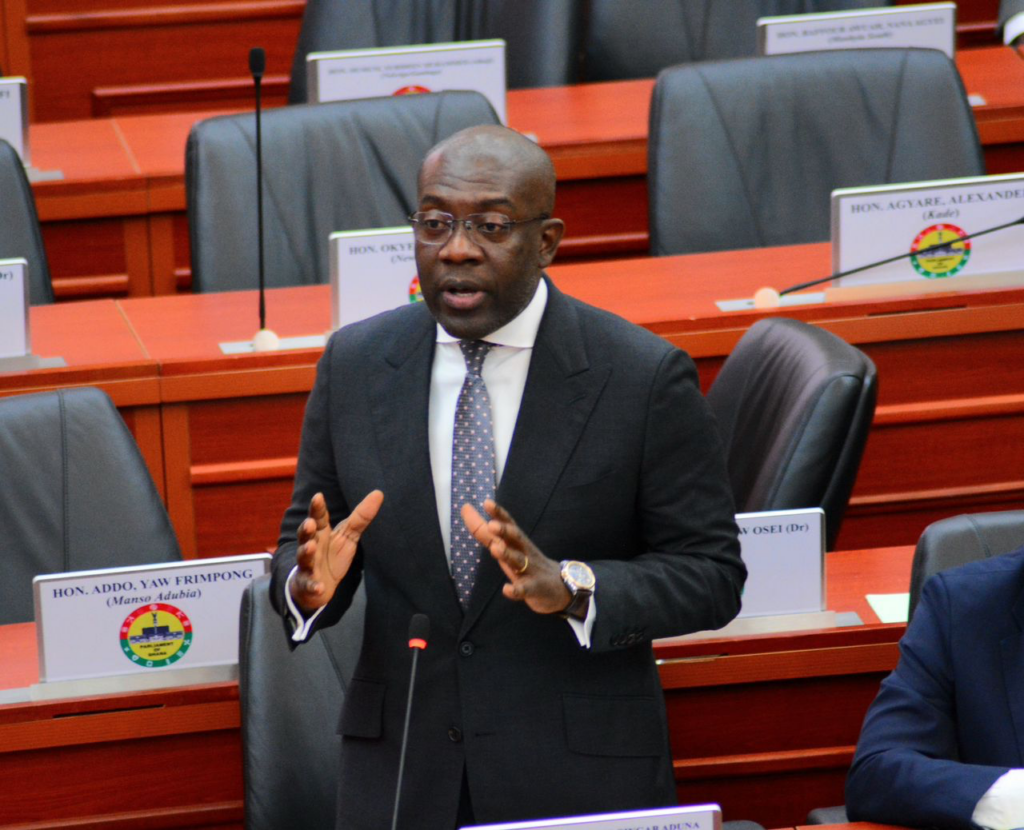
He also criticised what he described as unfulfilled government promises, including the 24-hour economy initiative and the proposed one million coders programme, saying many young people were still searching for employment opportunities.
Mr Oppong Nkrumah further accused the government of avoiding scrutiny over certain financial matters, including alleged losses linked to gold transactions.
He noted that the Minority had filed motions in Parliament to investigate a reported $214 million loss on gold transactions, as well as the circumstances surrounding the sale of approximately half of Ghana’s gold reserves.
“Every week we come to this chamber, we are not given the opportunity to move that motion,” he said, adding that such issues required urgent parliamentary scrutiny.
In concluding his remarks, Mr Oppong Nkrumah accused the government of focusing more on rebranding existing programmes rather than introducing genuinely new policies.
According to him, several institutions and initiatives had simply been renamed without substantive policy changes.
“The state of the nation now is one of rebranding,” he said. “PMMC is rebranded as the Gold Board, the Kassoa–Takoradi road project is now called a Big Push project, and the Domestic Gold Purchase Programme, which they inherited, is now called Accelerated Reserve Accumulation.”
“An improved state of the nation,” he concluded, “is not in reciting statistics. It is in the lives of the people.”