

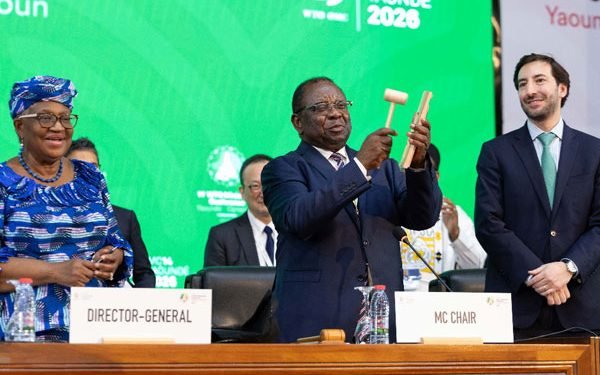
The global trading system is entering a more fractured and uncertain phase, with African economies likely to face tougher trade negotiations as divisions widen within the World Trade Organization (WTO).
Outcomes from the WTO’s 14th Ministerial Conference in Yaoundé reveal growing tensions over the future direction of global trade governance, as major economies increasingly push for plurilateral agreements negotiated among smaller groups of countries outside full WTO consensus.
While the WTO reported limited progress on support measures for small economies and special trade provisions, negotiations on critical issues including agriculture, fisheries subsidies, digital trade and broader institutional reform ended without agreement.
The unresolved matters have now been pushed back to Geneva for further negotiations.
Key amongst the impasse is agriculture as a long-standing priority for many African economies. Talks collapsed after sharp disagreements emerged between developed and developing countries over subsidies, food security protections and market access.
he United States reportedly called for a reset of negotiations, while other members pushed alternative approaches, leaving decades-old disputes unresolved.
However, the more consequential shift may be the growing momentum behind plurilateral agreements on investment facilitation, e-commerce and permanent moratoriums on customs duties for digital trade.
Backed by major powers including the United States and China, these arrangements are increasingly viewed by African policymakers as attempts to reshape global trade rules outside the WTO’s traditional multilateral framework.
This trend risks weakening the organisation’s consensus-based structure while reducing the influence of developing economies in future rule-making.
But for Africa, the implications could be far-reaching. Without a coordinated continental strategy, African economies may come under pressure to adopt trade and digital governance rules that restrict industrial policy options, limit control over emerging digital markets and weaken long-term negotiating leverage.
The concerns come at a critical moment as African countries continue efforts to deepen regional integration under the African Continental Free Trade Area while also positioning themselves within a rapidly evolving global economy.
Now that key decisions are now shifting to Geneva, where the WTO General Council is expected to revisit unresolved negotiations in the coming months, the future of multilateral trade governance and Africa’s ability to deal with it remains increasingly uncertain.
Therefore, the challenge for African economies will be to strengthen negotiating unity, protect policy flexibility and adapt to a global trade environment where geopolitical influence is becoming as important as economic competitiveness.