
Gender Minister Advocates Stronger Collaboration to Combat Violence Against Children in Ghana
Credit: myjoyonline.com

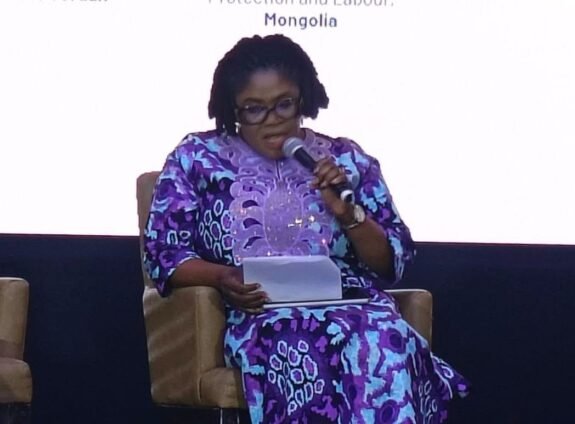
The Minister for Gender, Children and Social Protection, Dr Agnes Naa Momo Lartey, has called for stronger coordination among government institutions, families, schools and communities to strengthen efforts to prevent and respond to violence against children.
She said ending violence against children required more than individual interventions, stressing the need for effective child protection systems that respond to the needs of children.

Speaking at the Second Global Ministerial Conference on Ending Violence Against Children in Manila, Philippines, Dr Lartey said parental and caregiver support, safe schools and effective response systems must work together to ensure children receive the protection they need.
She made the remarks during a session on “Strengthening Child Protection Systems: A Multi-Sectoral Approach to Prevention and Responses – Scaling Prevention of Violence Against Children through the 3 Breakthroughs”.
The Minister stressed that when children report abuse or violence, functional systems must be available to respond promptly and provide the necessary support.
Highlighting Ghana’s progress, she said the Integrated Social Services initiative now covers all 261 districts, bringing together social welfare, health, education, justice and social protection actors to improve case management and referrals.

She also cited the training of 5,375 social workers, police officers and judicial personnel, alongside efforts to strengthen child protection legislation and professionalise the social service workforce.
On interventions to support families and communities, Dr Lartey highlighted the National Parenting Strategy and prevention campaigns that have reached more than 3.5 million people.
She further noted that every public senior high school now has trained Safe Space Focal Persons to strengthen child protection, while efforts are underway to link school reporting mechanisms directly to district social welfare services.

Despite the progress, the Minister acknowledged challenges, including workforce shortages, dependence on development partner funding and fragmented data systems.
She called for increased domestic investment, stronger accountability and improved coordination to ensure the sustainability and quality of child protection services.

Drawing lessons from Ghana’s experience, Dr Lartey identified three priorities: coordinating services around the needs of children rather than individual institutions, strengthening existing government systems, and investing simultaneously in the social service workforce and data systems.
She emphasised that protecting children was a collective responsibility that required sustained action to ensure prevention efforts translated into lasting improvements in their safety and well-being.