
Parliament Approves Landmark COCOBOD Reforms to Strengthen Ghana’s Cocoa Sector, Guarantee Farmers 70% of FOB Price
Credit: myjoyonline.com

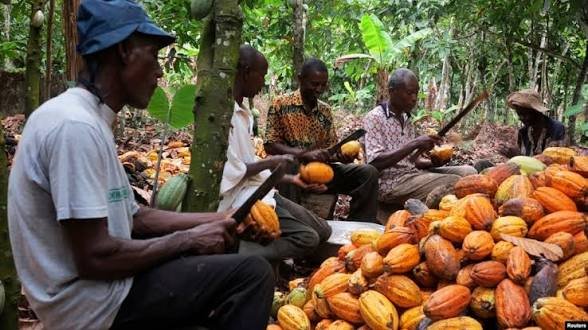
Parliament has passed the Ghana Cocoa Board (COCOBOD) Bill, 2026, introducing sweeping reforms aimed at revitalising Ghana’s cocoa industry through a modern governance framework, sustainable financing model and stronger legal protections for cocoa farmers.
The landmark legislation, approved under a certificate of urgency, replaces the fragmented laws that have governed the cocoa sector for decades with a single, comprehensive legal framework to regulate, supervise and promote activities across the entire cocoa value chain.
Under the new law, the Ghana Cocoa Board is formally established as the principal institution responsible for regulating cocoa production, marketing, processing and exports, while strengthening institutional governance, financial accountability, sustainability and traceability within one of Ghana’s most critical export sectors.
Farmers Guaranteed 70% of FOB Price
One of the most significant provisions of the new legislation is the legal guarantee that cocoa farmers will receive not less than 70 per cent of the Free-On-Board (FOB) price of cocoa. The provision transforms what has long been government policy into a binding legal obligation, protecting farmers’ incomes from future policy changes.
Presenting the Bill during its second reading in Parliament, Deputy Minister for Finance, Thomas Nyarko Ampem, said the measure was designed to safeguard the welfare of cocoa farmers.
“We should legislate this so that it becomes binding and no one can decide tomorrow to reduce the farmers’ share from 70 to 60 per cent.
“This is what some people are against. Some people do not want our farmers to be guaranteed a minimum of 70 per cent of the FOB price,” he stated.
The provision is expected to provide greater income certainty for hundreds of thousands of cocoa farmers and encourage increased investment in cocoa production.
New Financing Model for COCOBOD
The legislation also introduces a major shift in how COCOBOD finances cocoa purchases.
For more than 30 years, the Board relied heavily on syndicated international loans to finance cocoa purchases each crop season. However, following Ghana’s debt restructuring, accessing such external financing has become increasingly difficult, prompting the need for a more sustainable alternative.
Mr Ampem explained that the new law establishes a domestic financing framework that will enable COCOBOD to mobilise local resources to purchase cocoa beans directly from farmers.
“This Bill introduces a new funding model that will enable COCOBOD to source financing locally to purchase cocoa beans from our hardworking farmers,” he said.
The government believes the new financing structure will reduce dependence on foreign borrowing while ensuring timely payments to cocoa farmers.
Boosting Local Value Addition
Another major reform seeks to promote local industrialisation by increasing the supply of cocoa beans to domestic processors.
Although successive governments have pursued policies to expand local cocoa processing, forward sales and the use of cocoa beans as collateral for international financing have often limited supplies available to local factories.
To address this challenge, the new legislation requires that at least 50 per cent of Ghana’s annual cocoa production be reserved for domestic processing.
The measure is expected to stimulate investment in chocolate manufacturing and other value-added cocoa products, create jobs and increase Ghana’s earnings from processed cocoa exports.
Scholarship Programme Reforms
The Bill also restructures the COCOBOD scholarship programme to better align with the long-term development needs of the cocoa sector.
While children of cocoa farmers will continue to benefit from educational support, future scholarship awards will increasingly prioritise programmes that contribute directly to the modernisation, innovation and sustainability of Ghana’s cocoa industry.
Minority Supports Reform but Raises Governance Concerns
During parliamentary debate, the Minority welcomed efforts to modernise Ghana’s cocoa laws but expressed concerns about aspects of the proposed governance structure.
The Member of Parliament for Effia, Isaac Yaw Boamah, acknowledged that the existing legal framework had become outdated after decades of piecemeal amendments.
“When you have so many fragmented pieces of legislation, it is important to consolidate them to reflect contemporary realities, including the registration and licensing regimes,” he said.
However, he argued that COCOBOD should operate with greater institutional independence, expressing hope that the new governance framework would minimise external interference while strengthening transparency, accountability and efficiency.
Positioning Ghana’s Cocoa Industry for the Future
Ghana remains the world’s second-largest cocoa producer after Côte d’Ivoire, with the cocoa sector serving as one of the country’s largest foreign exchange earners and providing livelihoods for hundreds of thousands of farming households.
The passage of the Ghana Cocoa Board Bill, 2026, marks one of the most significant reforms of the sector in recent years. Government says the new legal framework is designed to strengthen corporate governance, improve financing, guarantee better returns for farmers, expand local value addition and position Ghana’s cocoa industry for long-term growth, competitiveness and sustainability.