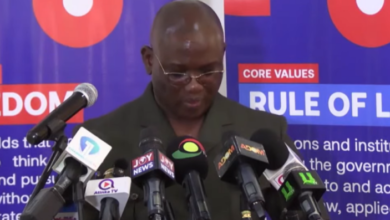


The Chamber of Petroleum Consumers (COPEC) has welcomed President John Dramani Mahama’s decision to absorb GH¢2 on every litre of diesel, describing the intervention as a timely relief for consumers while urging the government to implement a sustainable long-term strategy to address fuel price volatility.
COPEC Executive Secretary, Duncan Amoah, said the government’s intervention was necessary after diesel prices surged to nearly GH¢20 per litre at some fuel stations, placing significant financial pressure on commercial drivers, businesses and households.
Speaking on JoyNews’ The Pulse, Mr Amoah said the subsidy would provide immediate relief to transport operators and other diesel-dependent sectors of the economy.
“I do think that the government must intervene. It was a very positive intervention,” he stated.
He explained that the government’s decision to target diesel rather than petrol was justified by the unusually wide price gap that had developed between the two fuel products.
According to him, while petrol was retailing between GH¢14 and GH¢15 per litre, diesel prices had climbed to about GH¢19 and were approaching GH¢20 per litre at some filling stations.
“A situation where the person driving a diesel engine is paying 19 Ghana cedis, approaching 20 Ghana cedis, whereas the one paying for petrol was paying about 14 to 15 Ghana cedis—a variance of almost four Ghana cedis—was quite significant,” he noted.
Although he supported the targeted subsidy, Mr Amoah suggested that petrol consumers could also have received modest relief.
“I would have wished that some 20 pesewas could equally have been given to petrol users so that they also get some relief. But it is simply down to the trend,” he added.
Despite welcoming the intervention, the COPEC Executive Secretary cautioned that fuel subsidies should remain temporary, warning that prolonged government support could place an additional burden on public finances.
Instead, he called on the government to accelerate the establishment of a strategic petroleum reserve programme that would enable Ghana to purchase and store fuel when international prices are low and draw on those reserves during periods of global price spikes.
“This intervention is not one the government should rely on. Government should quickly find a way to move towards the strategic reserve programme module,” Mr Amoah said.
He argued that such a system would reduce Ghana’s vulnerability to fluctuations in the global oil market and provide greater price stability for consumers.
Mr Amoah also revealed that several Oil Marketing Companies (OMCs) had already begun reducing fuel prices ahead of the government’s subsidy, which takes effect on Tuesday, August 4, 2026.
He singled out Star Oil for acting swiftly, noting that the company’s diesel price had dropped to approximately GH¢16.97 per litre, while petrol was selling at about GH¢14.53 per litre.
According to him, other major OMCs, including GOIL, had also adjusted their prices and encouraged more fuel retailers to follow suit to ensure consumers fully benefit from the government’s intervention.
He further noted that increased competition among OMCs could help sustain lower fuel prices and ease pressure on commercial transport operators, many of whom had threatened to increase fares in response to recent diesel price hikes.
The GH¢2-per-litre diesel subsidy is expected to reduce operating costs for transport operators, help stabilise transport fares and provide relief for businesses and households as the government moves to cushion consumers from rising petroleum prices.