
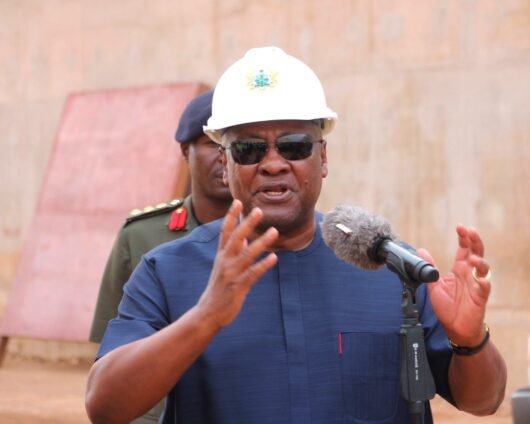
President John Dramani Mahama has attributed the devastating floods that swept through large parts of Accra on Monday to a combination of unprecedented rainfall, inadequate drainage infrastructure and years of unplanned development that have obstructed the natural flow of stormwater.
Following an aerial inspection of flood-affected communities, the President said the volume of rainfall recorded over the capital was among the highest in recent history, overwhelming drainage systems and exposing the city’s vulnerability to extreme weather events.
He explained that meteorological data showed a worrying rise in rainfall intensity over the past three years, a trend he said was becoming increasingly evident due to the effects of climate change.
“Tody’s rainfall is one of the highest in several years,” President Mahama stated.
According to him, about 140 millimetres of rainfall was recorded in Accra in a single day, far exceeding the previous peak of 56 millimetres recorded last year.
He further disclosed that figures from the Ghana Meteorological Agency indicate that total rainfall in June has risen sharply over the last three years, increasing from 85 millimetres in 2024 to 172 millimetres in 2025, before reaching 333 millimetres this year.
The President said the increasing frequency and intensity of rainfall meant drainage systems had little time to recover before another downpour, thereby heightening the risk of flooding across the capital.
President Mahama noted that although the heavy rains were a major factor, Accra’s flooding problem had been compounded by engineering deficiencies and rapid urban expansion that had encroached on natural drainage channels.
He said the city could no longer rely solely on existing drainage infrastructure, stressing that many waterways had become too narrow to cope with the growing volume of stormwater generated during intense rainfall.
The President explained that the situation had become even more critical because numerous developments had obstructed watercourses that previously served as natural flood channels.
Beyond engineering challenges, President Mahama said irresponsible human activities continued to worsen the flooding situation.
He cited indiscriminate dumping of refuse into drains, illegal reclamation of wetlands and construction along waterways as major contributors to recurring floods.
According to him, aerial surveillance also revealed several illegal dumping grounds where wetlands had been converted into refuse sites before eventually being sold for residential development.
Such practices, he noted, significantly reduce the city’s natural capacity to absorb and channel excess rainwater.
President Mahama stressed that tackling Accra’s perennial flooding would require a comprehensive approach that combines major engineering works with strict enforcement of planning and environmental regulations.
He said the government remained committed to implementing permanent measures to improve drainage infrastructure while removing illegal structures obstructing waterways.
Although acknowledging that such interventions often attract public criticism, he maintained that decisive action was necessary to protect lives and property.
The President’s remarks came after torrential rains triggered widespread flooding across several communities in Accra, inundating homes and businesses, disrupting traffic and forcing emergency agencies, including the National Disaster Management Organisation (NADMO), the Ghana Armed Forces, the Ghana National Fire Service and the Ghana Police Service, to undertake rescue operations in affected areas.
Authorities continue to assess the extent of the damage while intensifying efforts to assist displaced residents and restore normalcy to flood-hit communities.