
IMF Policy Coordination Instrument: Kojo Oppong Nkrumah Demands Government Brief Parliament
Credit: myjoyonline

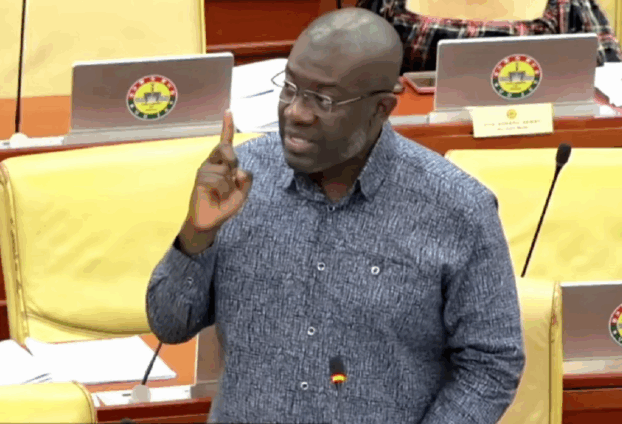
Ranking Member on Parliament’s Economy and Development Committee and Member of Parliament for Afoase-Ayirebi, Kojo Oppong Nkrumah has called on the government to brief Parliament on Ghana’s proposed International Monetary Fund Policy Coordination Instrument (PCI), insisting that transparency and accountability must remain at the heart of its implementation.
According to Mr Oppong Nkrumah, although the IMF’s Policy Coordination Instrument does not require parliamentary approval because it does not involve new financing, that should not be used as a basis to exclude Parliament or the Ghanaian public from the process.
He argued that the government has both a constitutional and democratic obligation to present the programme’s policy commitments, implementation roadmap and expected economic implications to lawmakers. Such a briefing, he said, would enable Parliament to effectively scrutinise the government’s commitments and monitor progress under the programme.
The former Information Minister stressed that legislators must be fully informed about the programme’s anticipated impact on economic growth, job creation and broader national development, describing these as the issues that matter most to Ghanaians.
Mr Oppong Nkrumah further maintained that citizens have a right to understand the economic reforms being undertaken in their name and should be able to hold the government accountable for the outcomes of those policies.
“Transparency and accountability must not end where legal requirements begin,” he stated, urging the government to adopt an open and inclusive approach throughout the implementation of the IMF programme.
The IMF’s Policy Coordination Instrument (PCI) is a non-financing arrangement designed to support countries with sound economic policies by providing policy guidance, monitoring reforms and signalling commitment to macroeconomic stability. Unlike traditional IMF lending programmes, the PCI does not provide financial assistance but helps countries strengthen economic reforms and build investor confidence through regular policy assessments.