

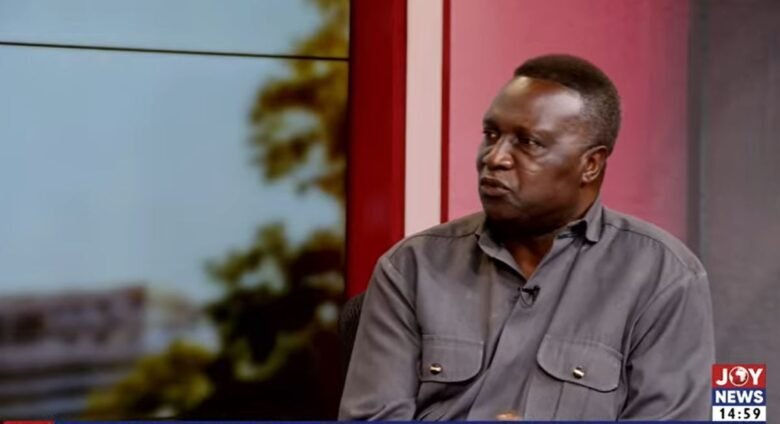
Former Education Minister Dr Yaw Osei Adutwum has called for increased teacher professional development to help address concerns over the use of social media language and jargon in students’ scripts during the 2026 West African Senior School Certificate Examination (WASSCE).
He said the appearance of informal expressions commonly used on social media in examination scripts highlights a growing challenge among some students in distinguishing between casual digital communication and the formal language required in academic settings.
Speaking on JoyNews’ The Pulse on Wednesday, September 9, Dr Adutwum said the development should not be treated as a crisis but rather as an opportunity to strengthen teacher training, classroom monitoring and academic counselling.
“I don’t think the sky is falling. It’s not the end of the world, but it’s an opportunity for teacher retraining, professional development,” he said.
Dr Adutwum stressed that teachers must be equipped to identify and address such challenges in the classroom before students sit for major external examinations.
He advocated continuous professional development and the strengthening of professional learning communities, where teachers can discuss emerging challenges affecting students’ academic performance and develop appropriate interventions.
“These issues can be discussed there, for teachers to then go back to their classrooms and be able to spot these things and advise students,” he explained.
According to him, teachers should promptly correct students when they use inappropriate or overly informal expressions in academic work and explain how such language could affect their performance in formal examinations.
He further argued that the problem should ideally be identified through classroom exercises, assignments and internal examinations, rather than first becoming evident in WASSCE scripts.
Dr Adutwum also called for stronger academic counselling and guidance programmes to help students understand the difference between informal communication on social media and the standard of language expected in academic and professional settings.
He believes a combination of teacher retraining, continuous classroom assessment, professional learning communities and stronger student guidance can help address the growing influence of social media language and prevent it from negatively affecting students’ performance in future external examinations.