

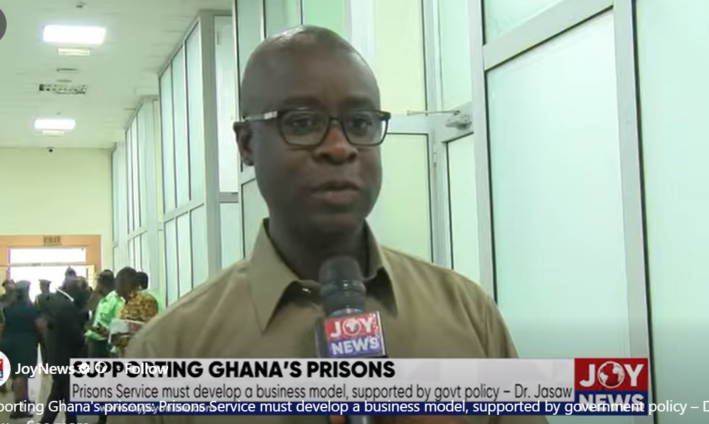
The Chairman of Parliament’s Food, Agriculture and Cocoa Affairs Committee and a member of the Public Accounts Committee (PAC), Dr Godfred Seidu Jasaw, has proposed a policy requiring government institutions and state-owned enterprises (SOEs) to purchase a portion of their goods from businesses operated by inmates of the Ghana Prisons Service.
He said the proposed policy would provide a reliable market for prison-based vocational enterprises, generate sustainable revenue for the Service and reduce its dependence on philanthropy and donor support.
Dr Jasaw made the proposal during an engagement between the PAC and the Ghana Prisons Service on Wednesday, October 21, 2026, following concerns raised by the Service’s Director-General, Patience Baffoe-Bonnie, about inadequate funding and limited support for its vocational enterprises.
According to the MP, relying on public sympathy and donations would not provide a sustainable foundation for developing the commercial activities of the Prisons Service.
“That model is about begging, looking for sympathy, and so on and so forth. That’s cheap labour already available—so that’s a factor of production. The question is, how do you turn this to your advantage?” he asked.
Dr Jasaw acknowledged the importance of skills training and capacity-building initiatives in prisons but stressed the need for a stronger economic model that would transform those skills into commercially viable businesses.
He proposed that government institutions and SOEs be required to source a percentage of their goods from prison-based enterprises. He also suggested that metropolitan, municipal and district assemblies procure some of their furniture and related products from artisans working within the prison system.
“Making a statement on government institutions and SOEs doing some compulsory procurement from the Prisons Service, assemblies doing some percentage of furniture and other related products from the artisans’ work,” he said.
Jasaw Calls for Bank Financing for Prison Enterprises
Beyond creating a guaranteed market, Dr Jasaw urged the Ghana Prisons Service to develop comprehensive business plans capable of attracting investment from commercial banks and other financial institutions.
He argued that clearly defined markets, predictable revenue streams and viable business proposals would help lenders assess investment risks and determine the potential returns from supporting prison-based enterprises.
“The Prisons Service itself should also think about how they can turn a business model that can attract co-financing from financial institutions. So the banks will go and assess risks and then see if there’s a good rate of return, then they’ll put in their investment,” he said.
The MP identified furniture production for schools, including dual desks, and wood carving as potential areas for expanding the Service’s commercial activities.
He explained that financial institutions would be more willing to support such ventures if the Prisons Service could demonstrate consistent demand for its products and establish a policy environment that guarantees access to buyers.
“If you can produce furniture for schools, dual desks, and they know there’s that market and that policy environment exists, then the financial institutions will also be able to help you,” he said.
MP Urges Prisons Service to Develop Commercial Opportunities
Dr Jasaw further urged the Director-General to identify the Service’s existing capabilities and engage qualified personnel to develop commercially viable proposals around its vocational activities.
He said the Prisons Service could leverage the skills of its officers, available labour and existing production facilities to establish sustainable businesses rather than depend on donations.
“I’m calling on the Director-General to look inwardly. I know a lot of capable prison officers there, and then hire personnel that can model business cases around the capitals and the advantages that the Ghana Prisons Service have, so that they don’t just rely on philanthropy. That will not help us. That is not transformation. That is not reset,” he said.
Dr Jasaw maintained that reducing dependence on philanthropy would require a deliberate shift towards commercially sustainable operations, supported by reliable markets, sound business planning and access to financing.
His proposal centres on using public procurement to create demand for prison-made products while enabling vocational enterprises within the Ghana Prisons Service to generate revenue and operate on a more sustainable financial footing.