
The Ministry of Health is to reopen the recruitment portal to absorb 16,000 nurses in two phases, President John Dramani Mahama has announced.
This is to help reduce the backlog of qualified nurses awaiting posting in Ghana.
The recruitment exercise will be carried out in two batches of 8,000 nurses each after the government opens the recruitment portal for applicants.
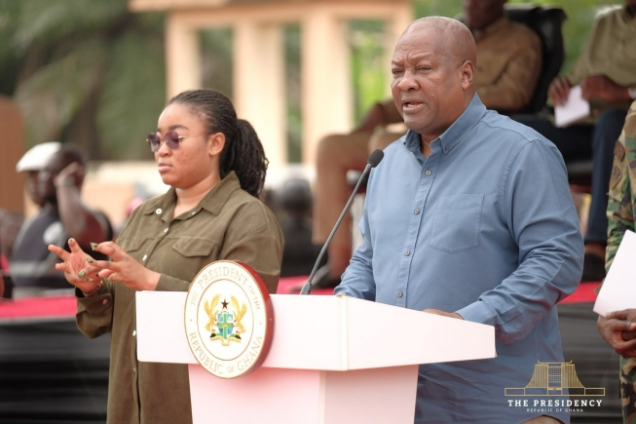
Speaking during a durbar in Ho on Free Primary Health Care Programme as part of a duty tour of the Volta Region on Thursday, July 16, President Mahama said “… I have told the minister of heath that as the economy gets better, we’ll continue to improve your conditions of service so that you are encouraged to do what you have to do.”
“Right now, we’re giving him clearance to open the portal to absorb 16,000 nurses in two batches.
First batch is 8,000, the second batch is 8,000, so that by the time my daughters and sons who are waiting to complete their training, there will be a shorter queue before they are posted,” President Mahama said.
He said the government would continue to improve the conditions of service for health workers as the economy improved.
President Mahama praised nurses and other health professionals for their contribution to healthcare delivery, describing them as one of the country’s most important professional groups because they cared for people when they were at their most vulnerable.
Quoting Florence Nightingale, he urged health workers to continue providing compassionate care despite the challenges they faced.
“When you get to work, you must put all that aside because psychiatrists and psychologists will tell you that healing is to do with the mind. If the mind accepts that the body will heal, then the body heals quicker,” he said.
The Minister of Health, Mr Kwabena Mintah Akandoh, said the ministry was considering incentives to encourage health professionals to accept postings to underserved communities.
He said one of the proposals under consideration was to promote health workers who accepted rural postings faster than their counterparts serving in urban areas.
“We are considering looking at promoting health professionals who accept postings to the rural areas quicker than those in the cities,” Mr Akandoh said.
Mr Akandoh said the ministry had also introduced post-basic nursing programmes in specialised fields, including oncology and critical care nursing, to build the capacity of health professionals.
He added that 32 scholarships had been awarded for PhD studies to support the training of health professionals in specialised areas.